

NFR usually means “Not For Real” in texting and chat apps, used when something feels too wild, funny, or unbelievable to be genuine. People type it to react to a shocking story, a joke that went too far, or news that seems staged. It’s casual, quick, and almost always informal.
You’ve probably seen it pop up in a group chat or under a TikTok comment and wondered if it was a typo. It isn’t. Once you know the nfr meaning behind it, you’ll start noticing it everywhere — a short, punchy way to show disbelief without typing a full sentence.
NFR Meaning in Text (Simple Explanation)
In texting, NFR stands for “Not For Real.” It’s a quick way to say something feels fake, exaggerated, staged, or almost too good (or bad) to be true.
People also use it loosely to mean “no way” or “seriously?” It works as a standalone reaction or tacked onto the end of a message. The tone depends entirely on context — it can express shock, amusement, or mild suspicion all at once.
Is NFR an Acronym, Short Form, or Slang?
NFR is best classified as internet slang built from an acronym structure. It takes the first letters of “Not For Real” and compresses them into three characters, the same way LOL or BRB work.
It isn’t a dictionary word, and you won’t find it in Merriam-Webster or Cambridge Dictionary as a texting term. It lives almost entirely in casual digital spaces — texts, comments, and chat apps — rather than formal writing.
What Does NFR Mean in Chat?
In chat apps and comment sections, NFR functions as a reaction rather than a statement. Someone might drop it after seeing a screenshot, a wild claim, or a plot twist in a story someone’s telling.
It carries a slightly skeptical energy, similar to saying “come on” or “get out of here” out loud. Chat culture rewards short reactions, and NFR fits that mold perfectly — three letters instead of typing out disbelief in full.
NFR Meaning on Snapchat
On Snapchat, NFR typically shows up in chat replies or captions reacting to a Snap that looks unbelievable. Someone might send a blurry photo of something wild happening nearby, and a friend replies “NFR” to mean they can’t believe what they’re seeing.
It also appears in Snap Stories as a caption, especially when someone posts something dramatic, funny, or staged-looking. The platform’s fast, visual nature makes short reactions like NFR especially common.
NFR Meaning on TikTok
On TikTok, NFR shows up constantly in the comment section under videos that feel too dramatic, too coincidental, or clearly staged for views. Commenters use it to call out content that seems scripted rather than spontaneous.
It’s also used sarcastically, where someone knows a video is obviously fake but plays along by commenting “NFR” instead of directly accusing the creator of faking it. This softer callout style fits TikTok’s joking, meme-heavy comment culture.
NFR Meaning on WhatsApp
On WhatsApp, NFR tends to appear in more personal, one-on-one conversations rather than public comment threads. Friends and family use it to react to gossip, a surprising update, or a story that sounds exaggerated.
Because WhatsApp conversations often feel more private, NFR here can lean gentler — closer to “wait, really?” than a public callout. Voice notes and quick texts both use it the same way.
NFR Meaning in SMS (Regular Text Messages)
In regular SMS texts, NFR works the same way it does across apps: a short reaction meaning something doesn’t feel genuine or is hard to believe. It’s less common in SMS than in app-based chats simply because SMS skews toward an older user base that uses fewer slang shortcuts.
When it does appear in SMS, it’s almost always between people who already text casually and know current slang.
Tone & Context Variations of NFR
NFR changes meaning slightly depending on the tone of the conversation. The same three letters can read as playful, annoyed, or affectionate depending on what comes before or after them.
1. Funny Tone
Used after a joke or meme, NFR signals amusement rather than doubt. “You said your cat has a LinkedIn? NFR 😂” reads as laughing along, not questioning the claim seriously.
2. Sarcastic Tone
Here, NFR mocks something obviously exaggerated or performative. “He said he ‘discovered’ the coffee shop everyone’s known about for years. NFR.” This usage pokes fun without sounding harsh.
3. Romantic Tone
In flirty texting, NFR can react to a compliment or bold statement with playful disbelief. “You said I’m your favorite person ever? NFR, stop.” It keeps things light while showing the message landed.
4. Angry Tone
Occasionally NFR shows real frustration when someone feels lied to or misled. “You said you’d call and never did. NFR.” This version carries a sharper edge than the joking uses above.
5. Playful Tone
This is the most common everyday use — light teasing between friends. “You really thought that outfit was fire? NFR 💀” It’s low-stakes and meant to get a laugh, not start an argument.
15 Real Chat Examples Using NFR
- “She said she’s never watched a single Marvel movie. NFR.”
- “Wait, you got the job?! NFR, congrats!!”
- “He tried to convince me pineapple belongs on everything. NFR.”
- “NFR that the WiFi went out during the final exam.”
- “You’re telling me it snowed in July? NFR.”
- “My phone died at 2%… NFR, so annoying.”
- “She said she made that dress herself. NFR, it’s too clean.”
- “NFR, did you really eat the whole pizza alone?”
- “He said the interview was ‘easy.’ NFR, it lasted two hours.”
- “You saw a celebrity at the gas station? NFR.”
- “NFR that traffic added an hour to my commute.”
- “She claims she’s never been late once. NFR.”
- “Wait, the concert got cancelled again? NFR.”
- “He said he built that PC from scratch. NFR, respect though.”
- “NFR, I can’t believe we’re already talking about next year.”
Grammar & Language Role of NFR
NFR functions as an interjection or a short exclamatory phrase rather than a traditional part of speech. It doesn’t conjugate, take plural forms, or follow standard grammar rules the way regular words do.
Part of Speech
NFR behaves like an interjection, similar to “wow” or “no way.” It expresses a reaction rather than describing an action or object.
Sentence Role
It usually stands alone or attaches loosely to the front or end of a sentence. It rarely functions as a subject, verb, or object within a full grammatical sentence.
Sentence Position
NFR most often appears at the start of a message as an immediate reaction, or at the end as a closing remark. Mid-sentence placement is less common and can feel awkward.
Formal vs Informal Usage
NFR belongs strictly to informal, conversational texting. It has no place in professional emails, academic writing, or formal documents.
Tone Impact
Because it’s short and abrupt, NFR adds punch and emphasis to a reaction. Removing it from a sentence usually softens the emotional weight of the message.
How to Reply When Someone Says “NFR”
The right reply depends on whether the original NFR was joking, skeptical, or genuinely surprised. Matching that energy keeps the conversation flowing naturally.
Funny Replies
“I know, right? Wild stuff.” Or simply, “Haha I couldn’t believe it either.”
Serious Replies
“I promise it’s true, I have proof if you want to see it.” This works when someone doubts a real claim you made.
Flirty Replies
“Believe it, I mean every word.” Keeps the playful tension going without overexplaining.
Neutral Replies
“Yeah, it really happened.” A simple, low-effort confirmation that ends the exchange politely.
Is NFR Rude or Bad?
NFR is not inherently rude, but it can come across as dismissive if used to question something someone said sincerely. Context and tone in the surrounding conversation matter more than the abbreviation itself.
Among friends joking around, it reads as harmless fun. Sent to someone sharing genuinely important news, it can feel like you don’t believe or take them seriously, so it’s worth reading the room first.
Who Uses NFR?
NFR is used mostly by younger texters who are active on visual, fast-paced social platforms. It hasn’t crossed over much into formal or professional communication.
Age Group
Teens and young adults, roughly ages 13 to 25, use NFR most frequently. It shows up less among older millennials and Gen X texters.
Regions
NFR is common across English-speaking online spaces, particularly in the US, UK, Canada, and Australia. Usage patterns are fairly consistent across these regions since slang spreads quickly through shared platforms.
Platforms
TikTok comments, Snapchat captions, Instagram DMs, and group texts are the main places NFR shows up. It’s less common on platforms geared toward professional or older audiences, like LinkedIn or email.
Origin & Internet Culture
NFR grew out of the broader trend of compressing common reactions into three or four-letter acronyms, following the same pattern as IRL, SMH, and TBH. As texting shifted from full sentences to quick shorthand, phrases expressing disbelief needed a fast version too.
It gained more visibility as short-form video platforms exploded, since comment sections reward quick, punchy reactions over long replies. There’s no single confirmed inventor or exact origin date, and its rise reflects gradual, organic slang evolution rather than one specific event.
Other Meanings of NFR (Beyond Texting)
NFR carries several unrelated meanings outside of texting, depending on the industry or context. The table below breaks down the most common ones.
| Meaning | Context | Example |
| Not For Real | Texting / Internet Slang | “She said she ran a marathon with no training. NFR.” |
| Non-Functional Requirement | Software Development | “The NFR states the app must load in under two seconds.” |
| Not For Resale | Business / Retail | “This sample bottle is marked NFR and can’t be sold.” |
| Non-Financial Risk | Business / Finance | “The audit flagged an NFR related to reputational damage.” |
| Not For Resuscitation | Medical | “The chart included an NFR order per the patient’s wishes.” |
| National Finals Rodeo | Sports / Events | “Cowboys from across the country compete at the NFR each December.” |
NFR Meaning in Dating
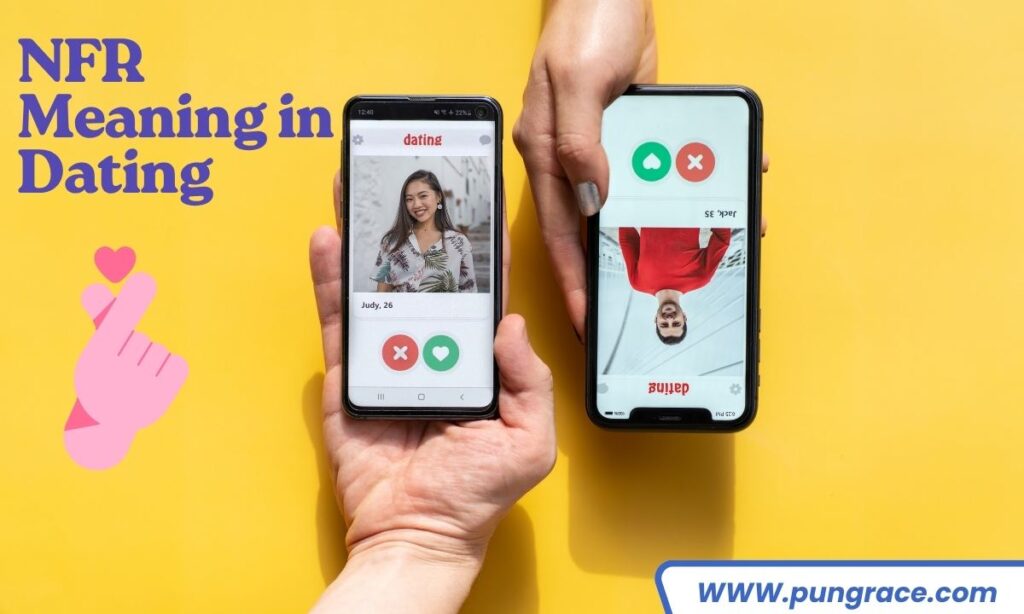
In dating conversations, NFR usually keeps its texting meaning — reacting with disbelief to a claim, compliment, or story a match shares. “You’ve never been on a bad date? NFR” fits naturally into flirty back-and-forth messaging.
NFR Meaning in Business
In general business contexts, NFR can refer to “Not For Resale,” a label used on promotional items, samples, or demo products that companies distribute but don’t intend to sell directly. It signals that the item shouldn’t be treated as standard retail inventory.
NFR Meaning in Software
Within software teams, NFR most often stands for “Non-Functional Requirement.” These are the quality standards a system must meet — think speed, security, and reliability — rather than specific features it performs.
NFR Meaning in Software Development
In software development specifically, an NFR outlines how well a system should perform rather than what it should do. Common NFR categories include performance, scalability, availability, and security, and teams typically document them alongside functional requirements during planning.
NFR Meaning in Medical Terms
In medical documentation, NFR can stand for “Not For Resuscitation,” an instruction similar to a do-not-resuscitate order. It’s used in patient charts to indicate that resuscitation efforts should not be attempted, based on prior wishes or medical judgment.
What Does NFR Mean on Urban Dictionary?
Crowdsourced slang dictionaries generally list NFR with the same core texting definition: “Not For Real,” used to react to something unbelievable, exaggerated, or staged. Since these platforms rely on user submissions, definitions can vary slightly in wording, but the general meaning stays consistent with everyday usage.
Crowdsourced entries aren’t an authoritative source the way an official dictionary is, so it’s best to treat them as a snapshot of casual usage rather than a formal definition.
Does NFR Mean the Same as Lana Del Rey’s NFR Album?
No, these are different uses of the same letters with no real connection. Lana Del Rey’s 2019 album is officially titled <em>Norman F***ing Rockwell!</em>, often shortened to NFR! by fans and press.
That NFR is a proper noun referring to a specific piece of music, while the texting NFR is a lowercase, everyday slang term meaning “Not For Real.” Context makes the difference obvious — one shows up in album reviews and playlists, the other in casual chat messages.
Comparison Table: NFR vs Similar Slang
| Term | Meaning | Typical Use |
| NFR | Not For Real | Reacting to something unbelievable or exaggerated |
| IRL | In Real Life | Distinguishing online life from real-world life |
| SMH | Shaking My Head | Expressing disappointment or disbelief |
| LFG | Let’s F***ing Go | Expressing hype or excitement |
| JK | Just Kidding | Clarifying a joke wasn’t serious |
Real-World Usage Insight
NFR tends to show up most in reactive, fast-paced conversations rather than planned or thoughtful messages. It works best as a quick gut reaction — the texting equivalent of raising an eyebrow — rather than a phrase people plan out in advance.
Because it’s so short, NFR travels easily between platforms without losing its meaning, unlike longer slang phrases that sometimes shift depending on where they’re used. That consistency is part of why it’s stuck around across texting, comments, and captions alike.
Conclusion
NFR mainly means “Not For Real” in texting, a quick way to react when something feels exaggerated, staged, or hard to believe. Outside of texting, the same letters take on completely different meanings in software, business, and medical contexts. When you come across NFR, the surrounding conversation is usually the fastest clue to which meaning applies.

Matthew is a creative writer with 4 years of experience crafting engaging blessing and pun-based blogs. He now brings joyful wordplay, positivity, and thoughtful humor to Pungrace.com, inspiring smiles and meaningful moments through every line he writes.